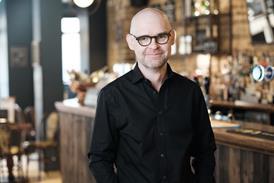







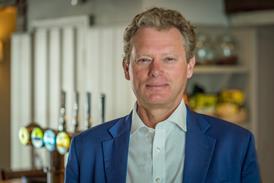





In the first of a series of articles profiling our Sustainability Awards finalists, ahead of the MCA Hospitality Awards 2026 in March, Caravan operations director Ross Walker discusses the group’s environmental and social sustainability journey
Sustainability is a core component of Caravan’s business. So much so that every role at the all-day dining brand includes a sustainability focus in its job description.
“We’ve been a B Corp since 2024 and we’re actively hiring people who care about the planet and the world around us,” explains Ross Walker, Caravan’s operations director. “We have a lot of people across the business who are very passionate about it, have lots of great ideas and drive their own initiatives, including packaging reduction, food waste reduction, and improving energy efficiency in sites.”
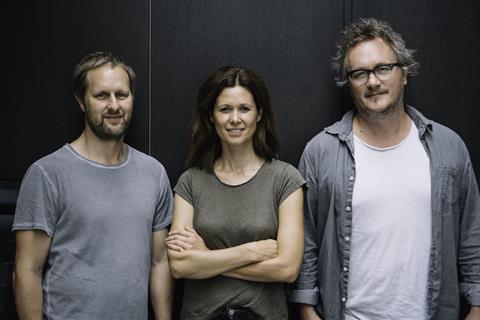
Walker credits the leadership of Caravan founders Laura Harper-Hinton, Chris Ammermann and Miles Kirby for giving teams the space and opportunity to help grow and develop the group’s sustainability ethos. “They’re three humble New Zealand founders who are approachable, and their openness resonates throughout the business. We have a very open-door leadership where we hope anyone in the team would be comfortable raising feedback or ideas. There’s also regular engagement surveys, working groups, and nominated representation across all departments.”
In the past year, Caravan’s focus has been on further embedding environmental and social sustainability initiatives within its business. In terms of the former, this has included the installation of solar panels at its north London roastery. The power generated through the panels provides enough energy to power the group’s Loring roaster, inhouse delivery van which itself uses 80% less gas than traditional burner roaster, as well as the group’s inhouse electric delivery van.
Caravan also operates returnable coffee bucket scheme, which is currently servicing about 20% of coffee volume produced by the roastery at the moment. All measures combined will annually save 15 tonnes of CO2, according to Walker.
Other environmental initiatives include the use of sustainable packaging and materials with reusable menus, compostable cups and takeaway packaging, and recyclable and compostable coffee bags. Coffee packaging emissions are also offset through ocean plastic collection. Additionally, the group has cut the number of suppliers servicing its restaurant sites by 20% to reduce transport emissions.
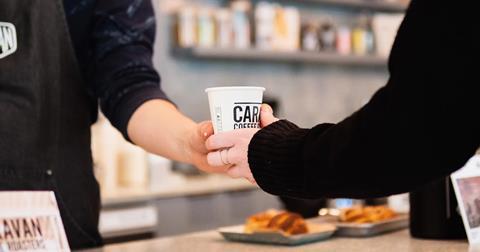
From a societal point of view, much of the group’s focus is on its female producer programme. Originally launched back in 2021, the two-part scheme sees Caravan aim to source of 50% of its coffee from female managed farms and then donate 10p from every kilo of coffee sold back to projects in those communities. To date the group has donated $80,000 through the programme.
“There was a recognition from our side that while 80% of the labour on coffee farms is carried out by women, only around 20% are run or managed by them,” says Walker, explaining the scheme. “We saw it as project to channel women’s stories within the coffee supply chain and also improve opportunities for them.”
Over the past three years Caravan has funded projects including setting up an egg-laying hen business and marketplace in Guatemala to help women in that community generate revenue outside of the coffee harvest; creating management leadership training opportunities in Rwanda around agriculture to help women there gain economic independence; and, most recently, setting up a livestock marketplace in Puru. In all cases the group has worked with The Chain Collaborative to help select, support and report on those programmes.
Other initiatives include donating profits from the group’s restaurants filtered water to Project Waterfall, which works on improving water quality in coffee growing countries. “We’re definitely on a journey in terms of our social and environmental impact,” says Walker. “And to that end we have a number of initiatives in place within our wider supply chain.”
One project currently under development to further this is an agroforestry programme that will enable Caravan to assess the sustainable farming practises of its producers including the level of regenerative farming in place. Each farm will be audited and scored based on framework that examines, amongst other things, how they’re using mixed crop planting of trees to aid soil health and implementing reductions of pesticide use.
“Ultimately, the work is never done,” adds Walker. “Restaurants and coffee supply chains are very carbon intensive, and we need to be looking at ways to reduce our scope one, two and three emissions.”