


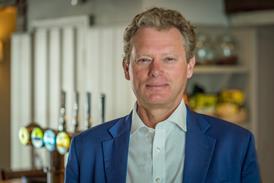
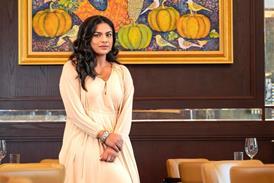


In the second part of our series profiling the MCA Hospitality Awards 2026 Sustainability Award finalists, Nick Ayerst and Julia Kaufmann of Gail’s discuss the bakery group’s green initiatives
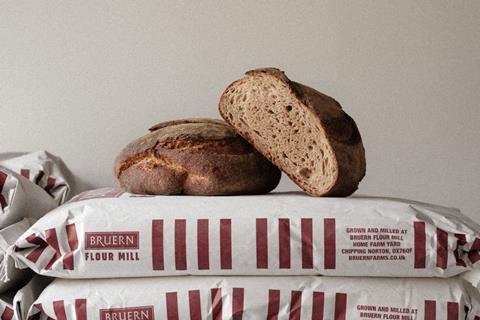
“I think we’re the first people who can sell you a loaf of bread where every grain of flour comes from one farm,” says Gail’s MD Nick Ayerst, as he discusses one of the latest additions to the bakery group’s food offering.
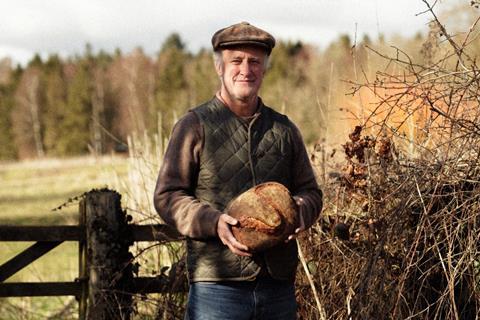
The loaf in question is the Bruern Farms sourdough that’s made exclusively from regenerative heritage wheat including emmer, wholemeal spelt and rye, all of which is grown and milled at the eponymous Cotswolds farm by owner Henry Astor. “A key driver of differentiation is where we get our grains from,” Ayerst continues. “It’s better food from better sources.
“Wheat is the single largest product line we used, and currently we’re making the transition from buying a blended product to working with UK farmers and sourcing directly from them. But that can only happen when they’re committed to growing in a regenerative manor that’s soil positive.”
That term, ‘soil positive’, is a key consideration for Gail’s and its sustainability strategy right now. By March this year, the fast-growing bakery chain, which is expected to pass the 200-site mark in the coming months, is aiming for all flour within its bread will be ‘soil positive’, meaning it is both organic and regenerative.
Such wheats typically produce slightly lower yields, Ayerst explains. “They use grain species that are less productive, but more natural to the UK environment. Additionally, the farmers must give the land time off in between to grow alternative crops to keep it healthy and nutritious.
“We’re working with those farmers on what that crop rotation is. We’re taking the secondary byproduct crops too, hence why most breads on the Gail’s menu have multiple grains in them. It’s flipping the dynamic from us, the baker, demanding what we need to instead using our skillset based on what’s best for the environment.”
Gail’s describes its buying and sourcing policies as being ‘very stringent’. There are no ultra processed elements, no ingredients are air freighted in, and any meat used is free range. “We want to produce food ethically and protect the soil,” says Julia Kaufmann, senior marketing manager at Gail’s. “Over 80% of ingredients grown in the UK and we’re always looking at ways to improve year on year.”
“The background is that we want to make sure we’re as good if not better than everyone else on the basics,” Ayerst adds. “We believe good food should go further; it’s something embedded in our core values.”
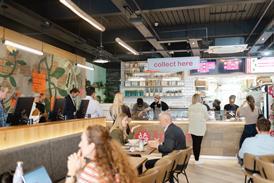
As well as being embedded within its sourcing strategy, sustainability is also a key consideration for Gail’s in the build of its bakeries. This was epitomised in 2025 when the group launched a new site within the former Southwark Fire Station in London, which it describes as its ‘most sustainably built bakery to date’.
Key elements of the structure were retained, reused or repurposed. The floor was reclaimed from three school gyms, and the tiles leftover from other bakery fitouts. End-of-life was also a key consideration. All counters were designed for disassembly with cladding panels fixed with coach screws so they can be replaced, and all new partition walls are an exposed FSC oak framework with cladding materials that can be unscrewed and reused.
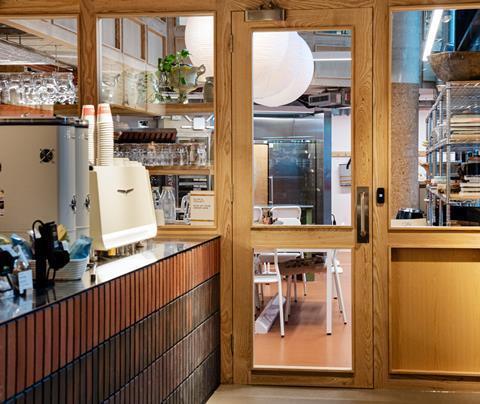
The large communal table, a centrepiece of the space, was made from the trunk of felled tree in Southwark that collapsed during a storm and created by social enterprise Goldfinger, who support children and people facing barriers to employment to learn a craft. The benches, meanwhile, were made from FSC oak by social enterprise RAW Workshop, which used British Pasture Leather (supplied from the hides of cattle raised on regenerative farms) and a sustainable filling alternative to foam.
Elsewhere, the build incorporated corrugated waste hemp panels from Margent Farm; toilets and basins are made from Woodio, a composite wood and resin; and the light fixtures are 3D-printed.
The bakery is also set up to operate as sustainably as possible, with sensor taps to minimise water use, and daylight sensor to automatically raise and lower the lighting levels to save energy. Like all Gail’s sites, it also runs on 100% renewable electricity.
“So much attention to detail and thought went into that bakery,” says Ayerst. “And that is something we’re now taking the lessons from that into our future builds as well.”
To that end, the group’s recently launched Surbiton bakery features a communal coffee table made entirely from Gail’s own coffee grounds. “Sustainability is something we see as key when designing each one of our bakeries,” adds Kaufmann. “It always focuses our mindset when we start a new project.”
In the year ahead, Ayerst says the mission at Gail’s is to continue evolving in these areas, while also improving the messaging to customers. “The challenge is the complexity of the topic, and our job is to make it as simple as possible for customers. There are lots of messages about how tasty the food and coffee are, now we’re starting to tell the stories of the farms the ingredients come from.”
Once a quarter, Gail’s brings together its 3,000+ employees for a series of talks from farmers, millers and bakers to give insight into the grower and supplier processes behind the ingredients on the Gail’s menu. It’s also part of everyone’s induction. “From minute one, day one, sustainability of food, but also the buildings and environment are a key, important part of the philosophy of the business,” continues Ayerst.
“It’s about getting a balance of how we tell people the story about thew food and drinks we’re bringing to them and communicate that and have our teams formally understanding that. I can’t claim we’re perfect on that, but my hope would be anyone could walk into one of our bakeries and start a conversation about where our food comes from, and our team would be able to talk it through.”
Kaufmann adds: “It’s about promoting better farming, and creating high quality, low impact bakeries.”