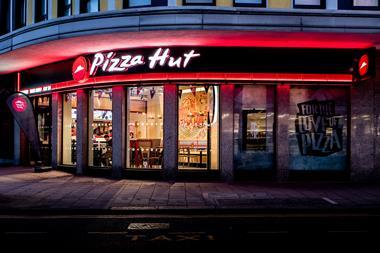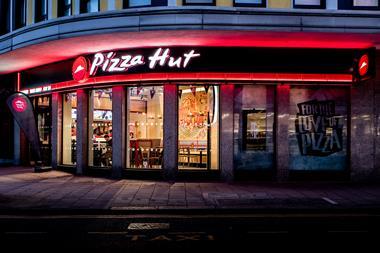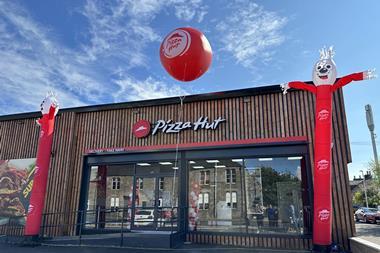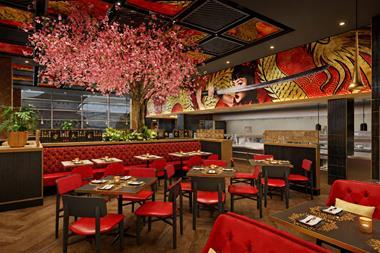























It’s hard to imagine that just over a decade ago, Pizza Hut Restaurants had as many as 350 dine-in restaurants, putting it near the top of the pile in terms of casual dining chains.
After being forced into a second pre-pack administration in little over nine months, and with a piecemeal reduction in its estate, the brand’s dine-in portfolio has now been hacked back to just 64, with 68 restaurants and 11 delivery sites closing in the latest insolvency round.
It’s easy to blame Pizza Hut’s latest woes on a failure to keep up with modern trends. Indeed, shifting consumer preferences, increased variety and competition, and an uninspiring product were no doubt factors – even if being fashionable was never part of Pizza Hut’s brand ambition.
And it wouldn’t be the first time the children’s birthday party favourite has suffered a downturn in fortunes and been written off, before defying the odds and making a comeback. But while the surviving 64 restaurants offer some hope for the ongoing restaurant operation, it’s hard to see a way back into three figures for Pizza Hut’s dine-in business. Nor is a willing and motivated operator likely to take the business on, as Jens Hofma did some 13 years ago, whose work was ultimately wiped out by a combination of the pandemic, inflationary cost pressures, and deserting customers.
Hofma, who led the management team which took over the master franchise in 2012, retrospectively acknowledged Pizza Hut “probably wasn’t the most obvious” brand to take on given its problems at the time.
“It was a business that had been in decline for a while and probably written off by many as being somewhat irrelevant and stuck in the past… leapfrogged by more aggressive pizza concepts. But we as a management team felt this brand and this concept did have real legs, certainly outside the more precious circles in society. Not that many brands have been around for 50 years, as Pizza Hut has been in the UK.”
Pizza pioneer
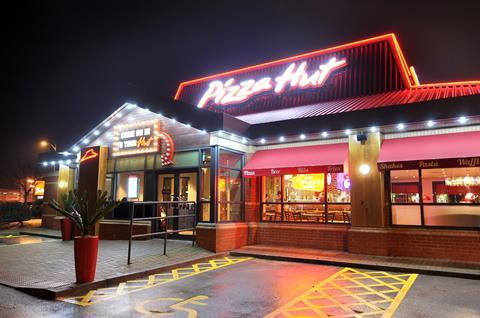
From its early beginnings in the UK in Islington in 1973, Pizza Hut was responsible for popularising American style pizza, bringing it to a mass market for the first time in Britain. During the 1980s and ’90s, the group saw rapid growth – at one point launching one restaurant per week, at a time when rival eating out options were few and far between.
With the iconic red roofed Huts housing indulgent deep pan pizzas, self-service buffets, all-you-can-eat salad bars, and a DIY ice cream factory, the restaurants became a staple of family occasions, the nostalgia factor seeing adults return for their own birthdays or with the next generation of children.
On the management side, after becoming established in the UK, in 1997, Global Restaurants (now Yum! Brands) bought out to partner with Whitbread as Pizza Hut owner, and in 2006, Whitbread sold its remaining stake to Yum! A franchisee was still wanted to run the dine-in estate, and in 2012, the restaurant division was effectively split off to operate as standalone businesses - albeit still a franchise. This saw the then 340-strong Pizza Hut restaurants division acquired by turnaround and restructuring specialist Rutland Partners, with the delivery business remaining with Yum!
Hofma, a Dutch management consultant with a background at Nestle, had previously risen to finance director roles at Nestle, CFO for Yum! Europe, and led KFC in Germany and the Netherlands before joining Pizza Hut. Transitioning from a faceless finance man to a passionate entrepreneur after “falling in love” with Pizza Hut, he set about an estate refurbishment, with £60m invested as part of an ambition to become a casual dining leader. The programme quickly delivered returns, with Hofma “blown away” by the impact, as the business also moved away from mass discounting to rebuild profit margins.
As he put it: “We are not just in the business of selling pizzas, but rather putting the guest experience at the heart of everything we do, which is why we are the business with a renewed focus, improving staff training and overhauling the look and feel of our estate with these new concepts.”
Meanwhile the management team sought to emphasises the importance of not getting caught up in trends, having previously followed and towards more Italian-inspired cuisine.
“We were very clear what Pizza Hut stood for, but we lost our way because we were trying to act upon every culinary trend that was happening in the market,” he said. “We tried that and it backfired dramatically: people thought we were not authentic, we weren’t true to what we were, and all the things people loved about Pizza Hut disappeared outside the window.
“Now we’re unashamedly American – not Italian, not authentic, not artisanal. It’s fun, indulgent pizza, which you love for what it is.”
Having exited 50 loss-making sites and refurbished half the estate, the business was in much better shape, and Rutland considered a sale as early as 2015 - though a sector slowdown meant it was not the right time to derive “fair value”. The time came in 2018, when Pizza Hut Restaurant’s senior leadership team completed a management buy-out (MBO), with funding from Pricoa for a reported £100m. Under management control, the business had “more freedom, more of an entrepreneurial spirit”. It moved further into counter-service, self-service elements and technology investment, to give guests “more control over their own experience”.
Pandemic problems
When the pandemic of struck, the business kept some of its estate open for delivery during lockdown to provide a “service to the community” for key workers. By July 2020, the business was looking to restructure its lease liabilities via a company voluntary arrangement (CVA), which he later described as a “necessary evil”, but putting the business in “a more robust position”.
“It’s aged me by about five years and it’s not a particularly pleasant process to go through, but I think it’s pretty unavoidable when you have such a large estate with over 200 individual landlords,” he said.
Realising the limitations of a single brand platform, the following year the renamed Heart with Smart group become itsu’s first franchise partner, going on to open three sites with the brand, while “actively seeking” additional partners. Itsu’s Julian praised the management team for helping the food-to-go brand enter regional leisure sites, while the partnership gave options to swap out Pizza Hut for a more contemporary brand.
Signs of more challenges were brewing however, with a looming deadline to refinance almost £31m of the company’s £73m debt pile. The group did refinance in 2024, extending its senior debt to 2027, but warned of ongoing pressure on family spending amid a cost-of-living crisis.
In November last year, it emerged the business was in talks to with investors over a potential sale. And in January, investment firm Directional Capital, Pizza Hut’s main partner in Sweden and Denmark, acquired the 141-strong estate in a pre-pack administration for just £10m. The ownership was to be short-lived, and with the Heart with Smart senior team having all left, the embattled business was forced to once again draft in administrators
Legacy brand
While run in different ways, as a brand Pizza Hut has suffered a similar trajectory to Frankie & Benny’s and TGI Fridays: all are American brands that radically impacted the market when they arrived, with decades worth of trading in the UK; all have exposure to large sites in retail parks, and have struggled to adapt to a new consumer environment; and all three have had to undergo a dramatic downsizing to avoid disappearing altogether.
While Frankie & Benny’s has found a new lease of life with a smaller estate and a nimbler operator in Big Table Group, Yum! will be looking to provide some stability to the remaining Pizza Hut Restaurants estate under its corporate ownership, joining 361 delivery Huts in the UK, Ireland and Northern Ireland.
With its large 3,000–5,000 sq ft restaurants, designed for families and longer dwell times, Pizza Hut has been outflanked by flashy new leisure park neighbours like Wingstop, who offer speed, convenience and an appeal to youth culture. And with its CVA and salami-slicing of its estate, Pizza Hut’s once strong covenant has been eroded over time, with landlords looking to the future rather than perceived legacy brands. It’s notable that two once flagship restaurants in Crawley and Leeds, both spoken about by as shining examples of the Pizza Hut restaurant model, are both among the closed sites.
Critics also complained about deteriorating levels of hospitality service, with door hosts stripped out, tables not laid, and the removal of table service, encouraging consumers to order via an app. For cash-strapped consumers, the offering was no longer considered good value for money, particularly compared to the heavy discounting at the likes of Domino’s. Despite Hofma’s protestations about not wanting to chase trends, Pizza Hut’s dated, lacklustre product was ultimately surpassed by the many and various superior pizza options on the market, as well as increased competition from on-trend QSR brands. There was either an inability or a failure to innovate and adapt its offering. Hofma’s claim to offer a populist product, beyond “precious circles” in London, no longer holds weight in 2025, with so many accessible eating out offerings across the market.
The business was also hamstrung in the rules of engagement with Yum!, being mostly restricted to dine-in, while the delivery-focused estate was able to benefit from structural tailwinds and shifting consumer behaviour towards delivery. As a franchise business, the requirement to pay royalty fees to Yum! ate into profits and amped up the pressure during trying times; while its ability to innovate on food was limited. Indeed, the delivery business’ sometimes bizarre NPD, such as burger-stuffed crusts, might have provided a momentary shot in the arm for marketing, but won’t have helped the restaurant business portray itself as a serious and credible.
With Yum! now operating a recoupled estate, it can at least optimise all sales channels accordingly and will be looking to re-capitalise on the enduring popularity of mass-market pizza takeaway and delivery. Bitter rival Domino’s may be facing its own slowdown, but its huge coverage, scale and volumes, well-drilled delivery operation and slick offering show there is still a great deal of demand for commercially produced pizza. The onus will now be on Yum! to reinvigorate Pizza Hut’s offering and capture some of this share from a reshaped base.