

















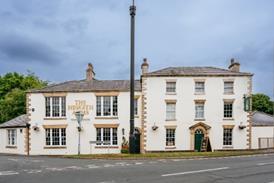

It’s a chilly November afternoon in Leeds, and sitting with Chris Welham and Elaine Beckett of Spirit Leased in the company’s Whitelocks pub, the subject turns to snow shovels. These are a big deal in the group’s managed estate as winter draws in, and Beckett says she was phoned by the group’s purchasing manager asking if they’d like some for the leased estate too.

This is, Beckett says, a “silly example” of how the Leased division can benefit from the scale and processes of Spirit’s 800-strong managed business.

Staying with the wintry theme, it’s also the tip of the iceberg. Beckett and managing director Chris Welham explain their plans to leverage more benefits of the managed estate to help the leased pubs across a range of areas, from template food menus to new business models currently being trialled.

But first some background. Welham became managing director of Spirit Leased in February 2012, joining from Greene King where he was operations director. It wasn’t an easy start, and rumours swirled that the leased pubs would be sold.

“At the time it was a real drag on the stock and we were openly being told that the share price is under performing because of our numbers,” he says. “Our net income was declining by 8%. It was shocking. I remember standing up in the atrium in the office. We do a quarterly update to the support centre and I remember thinking, ‘I’ve only just joined but these are my numbers, and they’re not very good’. That was a bit of a difficult moment for me!”

Welham had faith in the leased estate, though - “Why would you sell something that’s nowhere near its full potential and can add some real value to the business?” he asks. His confidence has been rewarded; the estate has now reached flat net income, just as he told analysts that it would 18 months ago.

So how was the turnaround orchestrated?

“We really had to start from scratch,” Welham says. “When I first arrived Mike [Tye, Spirit chief executive] said to me, ‘we have no strategy or structure for this part of the business’. It was a blank sheet of paper.”

Sorting out the personnel was one priority. The operations and admin team moved over from Punch after the companies diverged and a few more key members of staff were recruited, including Steve Worrall, who has joined as brand director for Spirit’s Metropolitan and Locals division. He’s tasked with leading the direction of both managed and leased Local Pubs, helping to foster links between Spirit’s two divisions.

Welham himself took responsibility for parts of the managed estate for six months, running the Locals division as Spirit looked to find synergies between the wet-led leased and managed outlets. He’s now responsible for looking at the best use of Spirit’s assets overall, deciding whether an individual pub is best suited to managed, leased or franchised.

And what of the leased estate? Welham, whose previous roles include regional operations director at Punch, says the team “went into a darkened room for three months” to devise a strategy. Each pub was examined for its demographics and local competition, and around two thirds were found to fit in the value/drink-led segment, with the remainder being more premium outlets.

This formed the basis of an estate plan, where each site was matched with the right licensee to “unlock its potential”. It meant breaking down the offer into five key areas: product, service, environment, price and communications.

“We didn’t have to wholesale change a lot of licensees,” says Welham. “A number of the offers that were already in situ were targeted at the right market, but not actually executed very well.”

The review also identified a number of disposals, typically smaller outlets in areas where the demographics have changed or the market has become more competitive. The leased estate now stands at 450, 100 fewer than when Welham joined (11 outlets have been converted to managed).

Study tour
Next came a study tour of Nottingham for the BDMs (there are nine in the division, plus an operations manager who covers Scotland). The group visited a selection of Spirit’s managed and leased pubs, and competitor businesses, and each was rated according to the five business areas.

Welham says it was a “real eye opener”. “Most of the managed pubs that we saw, because they were branded, had a specific format they were operating to in terms of external communication, internal service style, the way the outlet was dressed, the value or premium nature of the offer…

“And then we went to a couple of leased pubs. One of them was pretty good and one of them wasn’t. It gave us an idea of where we should be going in terms of getting the offer right. It isn’t about letting pubs and being a property company. It’s about really making sure we can unlock the offer.”

Welham adds: “When Mike [Tye] rang me I said, ‘there’s an opportunity here’. The opportunity to leverage managed scale into a leased business was really exciting, and to look at the model really differently.”

Support functions are now shared across the group, everything from HR to property, category management to IT (and snow shovels, of course).

Recruiting the right type of licensee is critical, says Welham. “What we’re mainly interested in is that experienced operator. That doesn’t necessarily have to be pub [operator]. What I really want is commercial acumen to run a business, retail entrepreneurial flair. I don’t really want people who don’t have any experience at all - that’s not the market we’re in.”

For example, the lessee of the Whitelocks in Leeds, where we meet, has a number of other ventures including an architect business. Does Spirit’s approach mean an end to the traditional “lifestyle” publican in Spirit Leased? “We have got people in our businesses who’ve been with us for a long time and you might call them lifestylers, but that’s not an issue. It’s more about the direction they’re taking the business and if they can deliver that offer.” The company can point to a relatively low churn rate of 10%, which it says is around half the industry average.

But employing the right people will have little impact if the business model is not fit for purpose. Welham understands the need for evolution, and talks of the “direction of travel” away from beer and towards food and other income streams.

Spirit is trialling a new agreement at four pubs where the licensee pays a percentage of turnover to Spirit instead of rent, the so-called “co-investment” agreement. It’s in addition to 11 franchised sites, seven of which are branded under the John Barras format, and a further four are unbranded but use the basic Barras concept.

“We take a share of sales as opposed to taking a share of net profit. It’s that thinking that says, ‘if this is about focusing on the guest and driving the top line, should we not both share in that success?’ It becomes more of a genuine business partnership.

“It’s still incumbent on us to bring a lot more to the table around the offer, which is where our scale and our knowledge from having a group comes in.”

The licensee’s percentage of the takings would vary from 10% to 20% according to factors such as the size of the property and the cost base of the business. Welham says this year Spirit Leased hopes to have the franchise or co-investment models in between 30 and 35 sites. “Thereafter it’s about what’s worked and what hasn’t.”

Cultural shift
It also requires a change in philosophy. “The old model doesn’t really take into account the top line. This is where the managed thinking really comes in, because the managed business is brilliant around taking market share and it’s very sales focused. That’s the cultural shift that I’ll be looking at getting into our business - let’s start with the guest and then work backwards. What’s the offer, what’s the price needed, and therefore what’s the deal?”

Margins is one area where Spirit’s scale can benefit the leased estate, says Welham. “I’ll give you a really good example. We spend £9m a year in managed on rump steak. If we can’t make that scale available to our licensees, we’re missing a bit of a trick.” There would be a “slight margin” for the company but the price for the licensee would be “still significantly lower” than if they bought it elsewhere, he explains.

Meanwhile, Spirit Leased is trialling a food package that includes items and learnings from the firm’s managed pub brands, which has the potential to operate in two thirds of the estate. Forty eight outlets to date have adopted the new offer and Welham says: “I would hope to see 100 pubs in this menu in the near future if we can, but I think the opportunity is probably more than that.”

Under the scheme, items from Spirit’s managed brands such as John Barras and Chef & Brewer can be added to the menus of its leased pubs. The company has identified which items would work for which outlet in a particular target market. Welham says: “If we put a menu in we will put the team in to train them, do a kitchen spec, do a kitchen assessment, train the front of house team, the back of house team, and talk about delivering that food and quality.”

Welham says it could be relevant for all but the most premium third of Spirit’s estate. Updated versions of the menu are now available for the franchise pubs and will be available at the other sites in Spirit Leased from January, while on-line food ordering is to be made available to the pubs.

Another example of Spirit Leased using its scale is through so-called “reverse logistics”, where Spirit arranges for waste products such as food and oil containers for be taken away, saving licensees £1,879 a year. Elsewhere, a trial of LED lighting has begun in the managed pubs and this could also be adopted in Leased. Help is also available with events. Welham explains that the company can offer a package for special occasions such as Mother’s Day or Bonfire Night that would include, for example, point of sale kits and specifications for particular dishes.

He explains: “One of our aims for this is to move increasingly away from having two divisions, so that we have a retail business of 1,300 pubs.”

In another piece of innovation, Spirit has introduced a deal called “Super 6” at c45 pubs to date, where they get discounted rates on up to six drinks products. The scheme can be overlayed onto Spirit’s standard lease and tenancy agreements and the aim is to help them compete in local markets.

Lower price points are possible because greater discounts are offered on the key products. “We’ve taken a bit of a haircut on margin but the licensees are able to sell more,” says Welham.

He explains: “The leased business model is imperfect. It can work really, really well for some people, and in certain situations it doesn’t work for either party. I think when you get into this value drinks sector, price becomes really important. And unless you’re providing enough discount you’re pricing yourself out the market so your guest base disappears.”

The company also brought rent setting “back in house” by giving BDMs responsibility over the process, albeit in conjunction with Spirit’s inhouse surveyor and signed off by senior members of the team. “It was contracted out to a third party, who did a great job for us, but I feel that the BDM should own the rent conversation with the licensee.”

Rent levels at about one third of the estate were rebased a year ago. “We’ve only got eight rent concessions live in our business at the moment so I think we’re not far off getting it right.”

Training has also been a key focus. Last year 97 pubs received a four-day training course in their pub under Spirit Leased’s dedicated training team. Seven have received the training so far this year, with more bespoke courses on specialist areas of the business due at three other outlets this month.

Welham says that historically, staff training would be the lessee’s responsibility. “What we said was, let’s have a go at the whole team.”

Equally important has been investment in the estate itself. Last year £10.5m was invested on 105 pubs, with an average spend of c£100,000 per site. This year it’s expected to be c£8m. In addition, iDraught has been rolled out across the estate.

Investments
The impact of an investment can be seen at the Fleece in Farsley, a village near Leeds, the first stop on our tour of Spirit Leased pubs in Yorkshire. The pub reopened in August after an extensive refurbishment that saw, for example, the bar area opened up and the back garden cleared out. Spirit invested £116,000 on the project, with the licensee spending £37,000 on fixtures and fittings.

Weekly sales have increased substantially and manager Gina Howard says she’s “gobsmacked” with the impact of the “phenomenal” refurb. “Gina’s story is not untypical of what we inherited 18 months ago,” says Welham. “It was an uninvested business, structurally and in the offer.”

The next two pubs offer examples of different types of operation within the estate, SO! Bar & Eats in Ripon is one of three sites run by the eponymous multiple operator. It opened in July after a joint investment between Spirit and the multiple. It now takes significantly more following the stylish refurb that has included adding a premium drinks range and quirky touches such as “tuck shop” sweets behind the bar.

Almost one in three (133) Spirit Leased pubs are run by 83 multi-unit operators. “The multiple operator population is a strong population for us because they bring a great skills set and have a good understanding of what it’s like to run a bigger business. If we can fish in that pool more I’d be really pleased.”

Next up is the Ainsty in York, which opened as a John Barras franchise site about a year after an investment of £230,000 to evolve the offer away from a straight community pub. For example, zoning has been added to have separate drinking and eating areas.

Weekly takings have risen to c£12,000 to £13,000 and the food mix has grown from less than 10% to about one third. General manager Wendy Hyde described the opportunity as a “lottery win” and said the franchise approach is “the way forward”.

What’s next? Welham hopes that the recent trials will eventually result in “maybe two/three maximum business models”: standard leases, branded franchises and the co-invest model. The latter would probably be split into three segments: community, mid-range and quality.

He says there are no plans for any more significant disposals - there’s “no financial imperative to sell”, he points out. Acquisitions in the estate are a possibility but not for the near future, as Spirit focuses on looking for new sites for Fayre & Square and Flaming Grill.

Welham is scathing of plans to introduce a statutory code for the pubco/tenant relationship, although under current proposals, Spirit Leased falls below the 500-pub threshold. He warns: “If it’s implemented in the form of the consultation document, it would be, in my view, a cure that would be worse than the perceived illness.” Welham labels it “heavy handed” and premature” and says self-regulation should have been given more time to bed in.

With the amount of innovation coming through from leased and tenanted operators, does he see Spirit as being ahead of its rivals?

“I’ll probably answer that question when we’ve proved our trials. I think what I am conscious of is we do need to do something different because of what the stats tell us about the decline of beer.

“I don’t think that’s news to anybody, but if you haven’t got scale that you can fall back on in terms of a managed arm, it becomes a bit more difficult.

“If we can unlock the scale and knowledge and retail know-how, and really drip that into the leased estate in a targeted way, then I think we’ve got a great opportunity.”