













The main headline from the Allegra UK Restaurant Market Report from May this year was ‘A new era of premiumised informality, driven by food pleasure seekers’.

This was developed from the multiple points of data, insight and analysis of the wider UK economy, the entire restaurant and pub market, and consumer behaviour. The economic backdrop was one of positivity from growing GDP, reducing inflation and increasing consumer confidence; however Allegra recognised that this did not automatically infer that consumers would be increasing their frequency of eating out.

Allegra’s data from the Eating Out Panel, which surveys 6,000 consumers each month, did show that average spend at dinner through the first Quarter of 2014, was increasing and delivering real term growth; spend at breakfast and lunch was not growing as much, if at all.

Indulgent dinner treats

This data indicated that consumers were treating themselves at dinner occasions, and turning it into more of an indulgent treat, whereas breakfast and lunch occasions were still functional and therefore consumers spend was more cautious. Consumers were taking a debit/credit approach to their eating out habits, spending more on a meal occasion that delivered extra value, especially for food pleasure seekers broadening their food horizons.

We summarised this analysis into the message of growth for operators that could deliver premiumisation, within an informal setting, whilst reaching the requirements of consumers looking for something that would deliver an added-value experience. For operators however, this provides a conundrum.

Operators have to develop menus that reflect value, so that they’re not alienating consumers who still haven’t seen their wages overtake inflation, whilst at the same time offering premiumised elements that encourage consumers to spend a bit more if they do feel like letting go and splashing out.

A great example is seen on the menu of ASK Italian, which is well-recognised by consumers for delivering value, and where typical main dishes are priced at £9.95. In their spring/summer menu this year, a dish of Lobster & Seafood Tagliatelle was introduced, pushing their menu exit price up to £14.95. This may well still be fairly cautious as we see other brands raising menu prices above the £20 mark as they seek to premiumise elements of their offering. It may surprise some to know that Frankie & Benny’s have a higher exit price on their menu of £22.25, than TGI Friday’s do with theirs, which only goes up to £21.49!

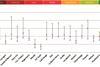
The chart to the right shows a range of different operators’ entry, exit and typical price points across the breadth of cuisine styles.

The importance of value

But premiumising elements of menus is only a part of solving the conundrum. Value is still highly important, especially as consumers need encouragement to increase their frequency of eating out, and still haven’t seen real-term wage growth, but national brands have sites in varying locations with differing socio-economic demographics, and cannot afford to take a one-size fits all approach to menu pricing.

The differences in regional pricing were analysed within Allegra’s latest research from the Restaurant Brand Portal – www.restaurantbrandportal.com; showing how canny operators are maximising the opportunity to inflate menu prices where the local demographics can stand it. This can cause difficulty from a brand consistency perspective, but operators have absorbed many cost increases over the past few years which haven’t all been passed onto consumers, and even brand loyalists won’t necessarily recognise regional price differentiation. Allegra believes that consumers are becoming used to price differentiation with products such as Beer and Fuel, therefore it should come as no surprise that restaurants flex their prices too.

Analysis of more than 120 brands on the portal, it was found that approximately 15% of operators use differential pricing on main course items. Of the brands with differential pricing, 10 of them would appear to apply a simple, two tier ‘London premium’ versus other regions whilst four operators are identified as using more than two pricing bands (Bella Italia, Browns, Beefeater & Table Table). Brasserie Blanc, PizzaExpress and All-Bar-One applied differential prices across the mains offering as a whole. These chains placed a simple ‘London premium’ on all prices.

Ringing the pricing changes

Other chains only changed prices on some selected dishes. Harvester, for example, only increased the prices of its chicken burgers in London, compared with the Midlands, while keeping the beef burger prices the same. Bella Italia and Browns differentiate more prices in the North than the Midlands, while Beefeater and Table Table target menus in the Midlands more for price differentiation.

Some brands are achieving a significant increase in average prices with their London premium, whereas the majority analysed were only increasing prices by 5% or less.

The science behind menu pricing is complicated, and will come at a cost for operators to introduce, ensuring that they manage the balancing act between sales elasticity and margin, whilst implementing multiple price tiers;  however it does highlight that operators can use every lever available to them to maximise the opportunities; indeed Allegra believes that every restaurant operator should be utilising differential pricing in order to combat the challenges of an improving economic situation with a consumer population that still doesn’t have more money in their pockets.